High-Protein Forage for Livestock Nutrition
Alfalfa in Cabery for farmers feeding animals that require more protein than grass hay provides
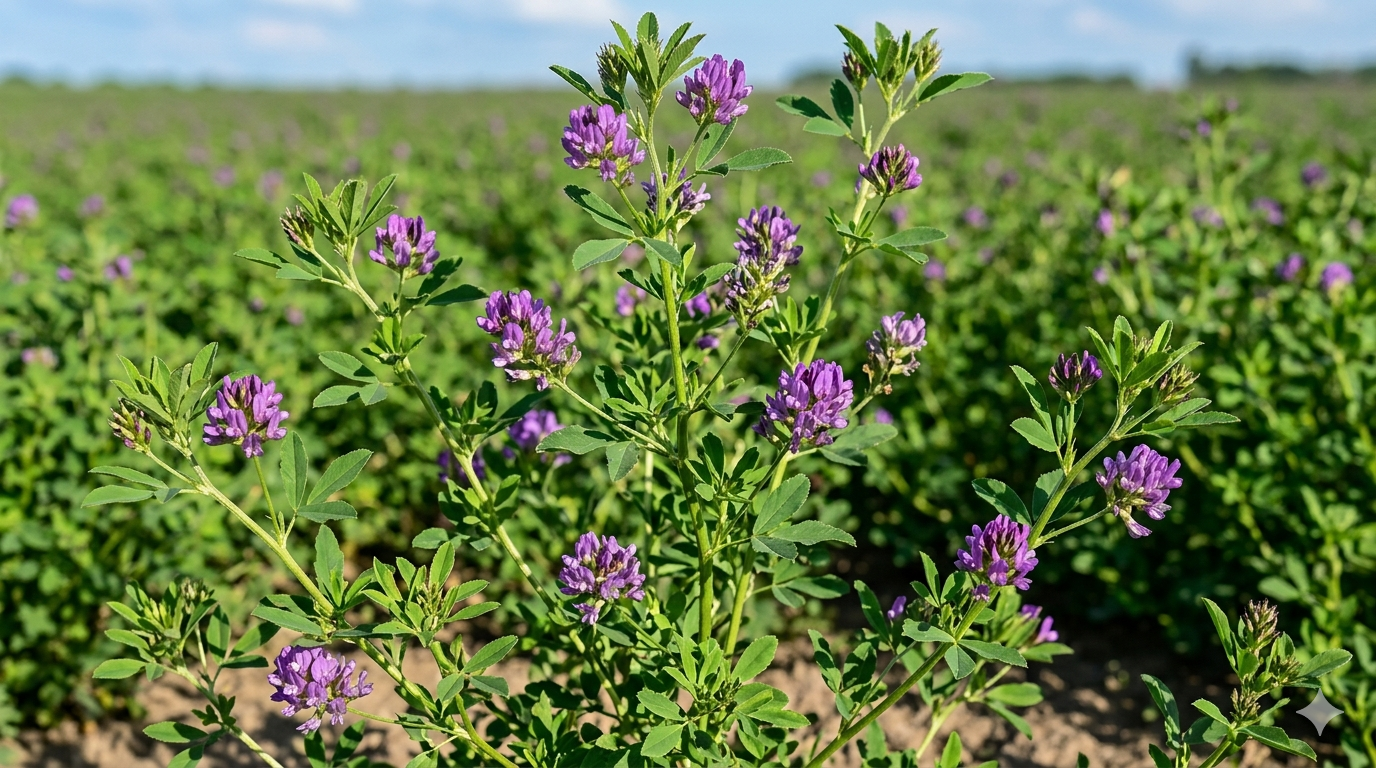
Alfalfa contains significantly more protein and calcium than grass hay, making it suitable for lactating animals, young growing stock, and livestock maintained in production systems where body condition and output depend on nutrient density rather than just fill. The crop grows differently than grass, developing deep taproots that access subsoil moisture and nutrients, which allows it to maintain quality through dry periods when grass species go dormant and lose nutritional value. VanWassenhove Farms produces alfalfa locally, managing stands for cutting timing that balances yield with leaf retention, because the nutritional value concentrates in the leaves while stems provide fiber structure—losing leaves during harvest or handling drops protein content even if bale weight remains the same.
The forage suits a variety of farm animals, including dairy cattle, goats, horses in work or competition, and sheep during late gestation and lactation when nutrient demands exceed what grass hay supplies. Bulk purchase options are available for operations feeding multiple animals or planning rations across extended periods where consistent quality matters for production outcomes.
Request current alfalfa availability and arrange pickup based on your livestock feeding timeline and storage capacity.
What Alfalfa Provides That Grass Hay Doesn't
Alfalfa's protein content typically runs between 15 and 20 percent depending on cutting maturity, compared to grass hay that ranges from 8 to 12 percent, which matters when you're formulating rations for animals that need muscle development, milk production, or weight gain beyond maintenance levels. The calcium content also exceeds grass hay significantly, supporting bone growth in young stock and milk composition in lactating animals, though this same characteristic requires careful balancing for horses prone to urinary calculi or other calcium-sensitive conditions.
When you feed alfalfa, you'll notice animals consume it more readily than mature grass hay because the leaf-to-stem ratio makes it more palatable and digestible, reducing waste from selective sorting where livestock eat preferred portions and trample the rest into bedding. Body condition improves more rapidly on alfalfa-based rations, and milk production or growth rates increase compared to grass hay feeding programs, which becomes visible within weeks rather than requiring months to detect differences.
Bulk purchasing requires storage that keeps bales dry and protected from sunlight, because alfalfa loses nutritional value faster than grass hay when exposed to moisture or UV degradation that bleaches leaves and breaks down proteins. Farmers ordering large quantities need to plan storage logistics before delivery, ensuring space that prevents ground contact and weather exposure that turns premium alfalfa into low-grade roughage unsuitable for the animals you intended to feed.
Livestock owners considering alfalfa for their feeding programs in Cabery usually ask about nutritional suitability, feeding rates, and how local production affects availability and cost.
Questions About Alfalfa for Livestock
What animals benefit most from alfalfa?
Lactating dairy animals, young growing stock, horses in athletic training, and pregnant or nursing females gain the most from alfalfa's higher protein and calcium content, while mature animals at maintenance or geldings in light work may not need the extra nutrients and could become overweight on alfalfa-heavy rations.
How much alfalfa should I feed compared to grass hay?
Feeding rates depend on animal class and production level, but many farmers use alfalfa as 25 to 50 percent of the forage ration for high-demand animals, balancing it with grass hay to moderate protein and calcium intake while still providing nutritional support beyond grass alone.
When is alfalfa available from VanWassenhove Farms?
Alfalfa follows cutting schedules based on stand maturity and weather conditions in Cabery, typically producing multiple cuttings from late spring through early fall, with availability depending on current inventory and seasonal growing conditions that affect yield and quality.
Why does alfalfa cost more than grass hay?
Alfalfa requires more intensive management including stand establishment, fertilization, and careful cutting timing to preserve leaves, and the crop's higher nutritional content means you feed less total weight to achieve the same production results, which justifies the higher per-bale cost through reduced overall feeding volume.
What should I look for to confirm alfalfa quality?
Quality alfalfa appears green rather than brown or bleached, feels leafy instead of stemmy when you handle it, and smells fresh without mustiness or mold odor that indicates moisture damage during storage or poor curing after cutting.
VanWassenhove Farms maintains alfalfa inventory based on cutting success and storage capacity, so confirming availability before planning your feeding program helps secure supply during periods when demand exceeds production. Contact the farm directly to verify quantities and schedule pickup for your operation.